


From historic loom towns and resilient mountain sheep breeds to modern sustainable weaves and luxury staircase runners, carpet making forms a rich, deeply ingrained pillar of British interior heritage, industrial innovation, and rural craftsmanship.
Walk into almost any home in the UK, and chances are you will step onto wall-to-wall wool, woven textured sisal, or a thick, patterned runner lining a Victorian staircase. While much of Western Europe opted for tiled kitchens or sleek hardwood planks, Britain remains steadfastly wedded to carpet. Yet beneath this everyday domestic comfort lies a rich, industrial story of world-leading craftsmanship, century-old textile towns, and a quiet modern renaissance driven by sustainability and natural fibres.
1. The Loom Towns That Draped the World
To understand Britain’s carpet obsession, you have to look at the industrial heritage of the Midlands and the West Country. During the eighteenth and nineteenth centuries, specific British towns became global centres for textile engineering, creating weaving techniques that still set the benchmark for quality today:
- Kidderminster (Worcestershire): Known as the historic capital of the carpet world, Kidderminster transformed from a quiet cloth-making market town into an industrial powerhouse. By the mid-nineteenth century, its towering brick mills housed thousands of power looms weaving millions of yards of high-grade carpet exported across the British Empire.
- Axminster & Wilton (Devon & Wiltshire): These names are no longer just geographical locations, as they have become patented weaving terms. Axminster carpets are woven by threading individual tufts of wool onto backing material, allowing for intricate floral and geometric patterns without wasting yarn. Wilton carpets cut or loop continuous yarns over wires, creating dense, durable textures famed for their luxurious feel underfoot.
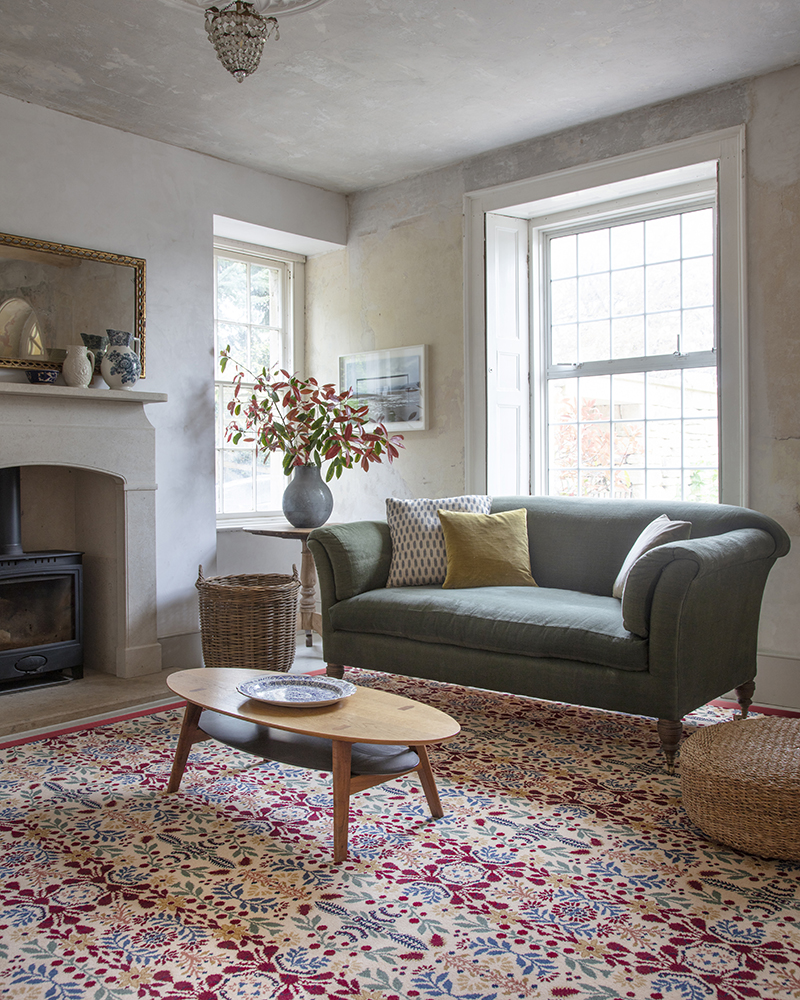
Traditional British Intricate Wool Carpet Pattern
2. The Unrivalled Magic of British Wool
At the heart of the UK’s carpet heritage is a remarkably resilient raw material: British wool. Unlike the soft, ultra-fine Merino wool used for Italian luxury suits, British sheep breeds thrive in damp, harsh climates like the Lake District fellside or the Scottish Highlands.
Breeds such as Herdwick, Swaledale, and Cheviot produce thick, naturally crimped fleeces. This unique texture gives British wool yarn an extraordinary natural springback, allowing carpets to crush under heavy furniture or foot traffic and bounce right back to form. Wool fiber also boasts natural flame retardancy, acts as an air filter to regulate indoor humidity, and possesses natural lanolin coatings that repel spills far better than untreated synthetic alternatives. Proper ongoing care through routine maintenance and hard floor maintenance ensures these natural qualities endure over many years of heavy domestic use.

Professional Maintenance Keeps Heavy-Duty Carpets Pristine
3. The Modern Revival: Sustainability & Bespoke Design
After decades of competition from cheap, petroleum-derived nylon and polypropylene carpets in the late twentieth century, the British carpet industry is undergoing a high-end renaissance. Today’s homeowners are swapping synthetic options for natural materials and heritage craftsmanship.
Leading modern UK manufacturers are embracing undyed natural fleeces, showcasing organic gradients from oatmeal and stone grey to rich chocolate brown. Simultaneously, hard-wearing plant fibres like sisal, coir, and seagrass have surged in popularity, providing tactile contrasts against smooth painted walls. Even in high-traffic work environments, regular upkeep via professional carpet cleaning ensures these natural textures retain their structure and aesthetic appeal over time.

Modern Natural Sisal and Plant-Based Flooring
🧵 Key Milestones in British Carpet History:
- 18th Century: Development of Axminster and Wilton loom techniques in South West England.
- 19th Century: Kidderminster emerges as the global carpet capital during the Industrial Revolution.
- Late 20th Century: Rise of synthetic fibers and wall-to-wall tufted carpeting across suburban homes.
- Modern Era: Resurgence of sustainable British wool, undyed yarns, and natural plant-based weaves.
💡 Heritage Insight:
The preservation of British carpet heritage relies on supporting sustainable sheep farming initiatives across the UK. By choosing local wool products, modern homeowners actively contribute to rural economies, biodiversity, and century-old weaving traditions.
4. A Craft Worth Preserving
Britain’s love affair with carpet is not just about battling cold weather, as it represents an enduring legacy of domestic engineering and agricultural craftsmanship. As interior design pivots away from disposable, fast-decor culture towards authentic, sustainable materials, the heritage weavers of Kidderminster, Devon, and the Yorkshire Dales are proving that the traditional British carpet is far more than just something to walk on, serving as living history underfoot.


