



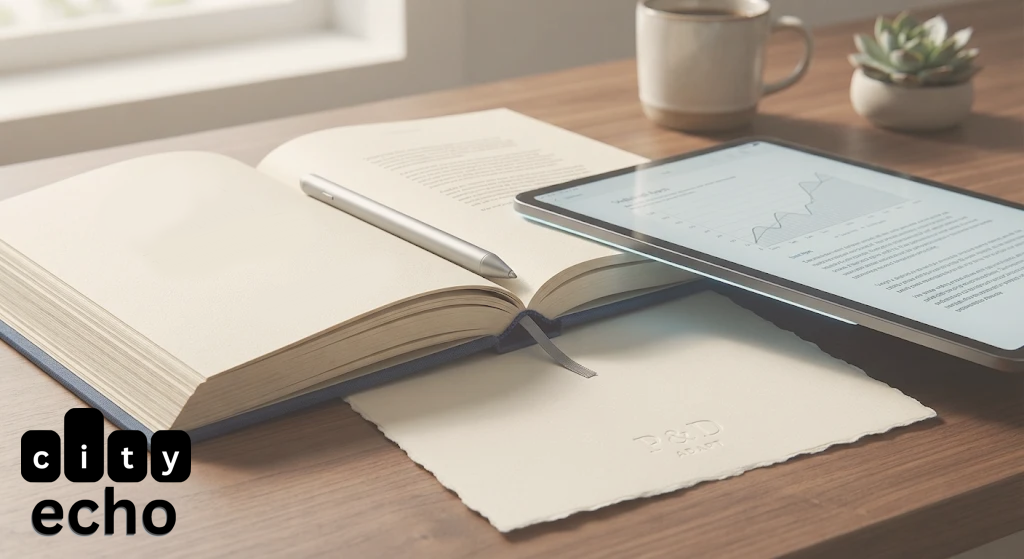

For more than three decades, tech prophets have predicted the imminent death of paper. The “paperless office” was supposed to sweep filing cabinets into the dustbin of history by the turn of the millennium, while e-readers and tablets were meant to relegate physical books, magazines, and brochures to museum cases. Yet walk into any design studio, independent bookshop, luxury boutique, or modern logistics warehouse today, and you will find paper thriving, not because the digital revolution failed, but because print learned how to reinvent itself.
Rather than competing head-to-head with screens on speed and disposability, the printing and paper industries pivoted toward permanence, tactility, hyper-personalisation, and seamless digital integration.
Summary Highlights
- Commercial reinvention: Legacy printers traded mass-market flyers for automated web-to-print logistics, luxury tactile books, and e-commerce packaging.
- The physical-digital bridge: New service businesses emerged to digitise legacy archives, run digital mailrooms, and eliminate inventory through print-on-demand.
- Analogue focus: In an era of constant notifications, tactile stationery and pocket notebooks have become cult productivity tools.
- High-tech paper futures: Innovations in conductive inks, NFC-embedded fibres, algae pigments, and moulded paper bottles are turning paper into a sustainable smart material.
1. How Legacy Print Businesses Adapted to a Digital World
When the internet began hollowing out traditional commercial printing in the late 1990s and 2000s, decimating high-volume runs of Yellow Pages directories, bank statements, and mass-market flyers, the printers that survived did so by changing what they sold. They stopped selling “ink on paper” and started selling logistics, brand experience, and data management.
Consider the transformation of mid-sized commercial print shops across the UK and North America. Twenty years ago, a typical regional printer survived on predictable monthly orders of stationery, forms, and brochures. When those orders evaporated, forward-thinking shops ripped out massive offset presses built for 100,000-unit runs and invested in industrial digital presses and automated fulfilment lines. Today, many operate as “web-to-print” marketing logistics hubs. When an estate agent updates a property listing online, an automated trigger sends a personalised, glossy direct-mail postcard to the 50 closest neighbours within 24 hours, combining digital data targeting with physical cut-through in an era of inbox fatigue.
A similar pivot saved book publishing. When Amazon launched the Kindle in 2007, publishers braced for the collapse of physical book sales. Instead, a curious split occurred. While mass-market airport thrillers migrated to screens, readers began demanding higher physical quality for the books they kept. Independent publishers and heritage houses adapted by treating books as collectible design objects, using heavyweight uncoated stocks, exposed Smythe-sewn bindings, foil-stamped covers, and sprayed edges. By the mid-2020s, vinyl records and physical books had become twin symbols of “slow media,” proving that when content becomes infinitely reproducible on a screen, its physical vessel becomes a luxury item.
At the same time, the explosion of e-commerce opened an unexpected new frontier: packaging. Because online brands had lost their physical storefronts, the cardboard shipping box became the new retail handshake. Legacy paper mills and commercial printers pivoted aggressively toward structural packaging and unboxing experiences. Independent sellers and global tech giants alike began investing in custom-printed mailer boxes, water-activated paper tape, and embossed inserts, turning utilitarian corrugated board into high-margin brand storytelling.
2. New Business Models Built Around the Paper-Digital Bridge
The friction between legacy paper archives and modern digital workflows did not just force old companies to adapt; it birthed entirely new categories of service businesses dedicated to bridging the physical and virtual worlds.
A prime example of this evolution is Wiltshire-based DA Archive Solutions (DAAS). Founded in 1987 as a specialist microfilm bureau, DAAS built its early business on preserving physical records in miniature analogue formats. As corporate and public-sector clients, from the NHS and local councils to the Ministry of Defence and financial institutions, began transitioning toward digital workflows, DAAS evolved alongside them. Rather than treating paper as obsolete, the family-run business built a thriving operation around managing the transition between physical and digital. Today, its team digitises over half a million documents a month, ranging from A0 architectural drawings to historical slides, while running “digital mailroom” services that intercept incoming physical post, scan it, and route it directly into cloud workflows.
While companies like DAAS built businesses around digitising the past, print-on-demand (POD) pioneers built an industry around eliminating inventory. Platforms such as Blurb, Lulu, and IngramSpark upended traditional publishing economics. Under the old model, printing 50 copies of a niche art monograph or family history was financially impossible. Modern automated digital binding lines now print, trim, glue, and ship a single custom hardcover book in minutes, turning millions of independent creators, photographers, and corporate historians into publishers overnight.
Meanwhile, a wave of analogue productivity brands proved that paper could thrive precisely because workplaces had become overwhelmingly digital. In offices dominated by Slack notifications and digital calendars, companies like Moleskine (revived in the late 1990s) and Field Notes built cult followings around distraction-free focus. Field Notes took the humble pocket memo book, inspired by 20th-century agricultural promotional notebooks, and turned it into a thriving subscription business with limited-edition seasonal runs, demonstrating that even digital-native millennials and Gen Z workers actively crave tactile paper tools.
3. What the Future Holds: Innovations Reshaping Print
If the past twenty years were about print surviving alongside digital, the next twenty years are about paper becoming a smart, sustainable, high-tech medium in its own right.
One of the most promising breakthroughs lies in printed electronics and smart packaging. Imagine a pharmaceutical carton that tracks its own temperature history and alerts a patient’s phone if the medicine was exposed to heat, or a smart label on fresh produce that changes colour when the food begins to spoil. Using conductive inks made from silver, carbon, or graphene, material scientists are printing circuits, sensors, and ultra-thin batteries directly onto paper and cardboard substrates. Because these circuits can be produced on modified high-speed printing presses, they promise disposable, recyclable electronics at a fraction of the cost of silicon chips.
Paper is also emerging as the primary weapon in the war against single-use plastics. Driven by global regulatory bans and shifting consumer demand, paper engineering has entered a golden age. Companies like Pulpex and Frugalpac are pioneering moulded paper bottles capable of holding wine, spirits, and liquid detergents, complete with biodegradable plant-based barrier coatings that prevent moisture from weakening the fibres. What used to require blow-moulded polyethylene is increasingly being formed from sustainably sourced wood pulp.
At the same time, luxury brands and cultural institutions are blurring the boundary between physical print and digital interactivity. By embedding paper-thin Near Field Communication (NFC) chips and invisible digital watermarks, such as those developed by Digimarc, directly into paper fibres during manufacturing, a sheet of paper becomes a physical portal. A simple tap of a smartphone against a printed wine label, museum exhibition guide, or concert poster can instantly launch authentication certificates, augmented reality (AR) animations, or behind-the-scenes video.
Even the environmental footprint of ink itself is being reimagined. Waterless offset printing has begun eliminating the toxic chemical dampening solutions traditionally required on presses, while bio-engineered pigments are turning print into a climate-positive medium. Startups like Living Ink, which converts captured carbon and algae into rich black pigments, are showing how ink can replace petroleum-derived carbon black with renewable biological matter.
The Paperless Office: Separating Myth from Reality
- The Myth
- Digital screens and cloud storage would make physical paper completely obsolete across homes and workplaces.
- The Reality
- While everyday office printing and disposable newsprint declined, global demand for paperboard packaging, specialty labels, and high-craft print has expanded steadily, while hybrid archiving firms process millions of legacy and incoming paper records every month.