





Across Britain’s building sites, architectural studios, and joinery workshops, a quiet tug-of-war is underway between centuries-old trade skill and rapid digital automation. As AI in construction moves from experimental software demos into everyday project workflows, many clients and practitioners are asking the same question: where does human craftsmanship stand when algorithms can draft floor plans, schedule deliveries, and flag compliance risks in seconds?
Far from making skilled tradespeople redundant, the latest wave of site technology is exposing just how irreplaceable physical precision remains. While artificial intelligence excels at handling repetitive pre-construction admin, cost modelling, and early spatial concepts, turning a digital render into a watertight, structurally sound building still relies entirely on experienced hands.
Summary Highlights
- Rapid studio adoption, cautious execution: RIBA’s 2026 AI Report shows 74% of UK architectural practices now use AI on projects, yet most stress that human judgement remains vital for design quality and safety.
- Why physical trades remain irreplaceable: On-site problem-solving, uneven heritage structures, and millimetre-accurate material fitting sit firmly among the jobs AI can’t replace.
- Bespoke joinery meets digital precision: Modern workshops pair CAD optimisation and CNC machining with traditional carpentry skills to deliver custom timberwork without sacrificing character.
- Architectural glazing and compliance: Commercial developments increasingly rely on precision-engineered structural glass where certified installation and British Standards leave zero room for algorithmic guesswork.
1. AI in Architecture and Pre-Construction: Speeding Up the Drawing Board
To see how AI in construction is actually working on the ground, it helps to separate the studio from the site. Over the past two years, adoption of AI in architecture has accelerated sharply across the UK. According to the Royal Institute of British Architects (RIBA) 2026 AI Report, 74% of surveyed British architectural practices now use artificial intelligence on at least some projects (up from 41% in 2024), with early-stage visualisation and regulatory compliance checks leading the way.

Out in the field, digital surveying and construction technology, from automated aerial site mapping to predictive clash-detection in Building Information Modelling (BIM), has cut down costly planning errors before a single foundation is poured. Yet even RIBA’s data highlights an important caveat: while 73% of AI-using practices report faster productivity, only 17% believe AI directly improves the quality of the final design. Speed on screen does not automatically translate into craft on site.
2. The Jobs AI Can’t Replace: Why Skilled Trades Hold the Advantage
When commentators list the jobs AI can’t replace, hands-on construction and specialist finishing trades consistently sit near the top. Unlike a controlled factory assembly line, real-world buildings, particularly Britain’s vast stock of Victorian terraces, listed commercial properties, and bespoke extensions, rarely feature perfectly plumb walls or uniform tolerances.
At the same time, the Construction Industry Training Board (CITB) estimates that the UK sector still needs tens of thousands of additional workers every year through 2030 to meet housing, infrastructure, and retrofit demand. Because software cannot scribe a skirting board to an uneven stone wall or troubleshoot hidden structural quirks mid-refurbishment, experienced tradespeople hold more leverage than ever. Much like how AI is reshaping independent artisans and cottage industries, digital tools in the building trade act as behind-the-scenes assistants for quoting, stock calculation, and scheduling, freeing makers to focus on physical execution.
3. Bespoke Carpentry and Joinery: Pairing Digital Accuracy with Hand-Finished Warmth
Nowhere is the balance between modern tooling and traditional craftsmanship clearer than in woodworking. Today’s joiners routinely use computer-aided design (CAD) and AI-assisted nesting software to map timber grain, minimise offcut waste, and pre-cut complex joints with sub-millimetre repeatability.
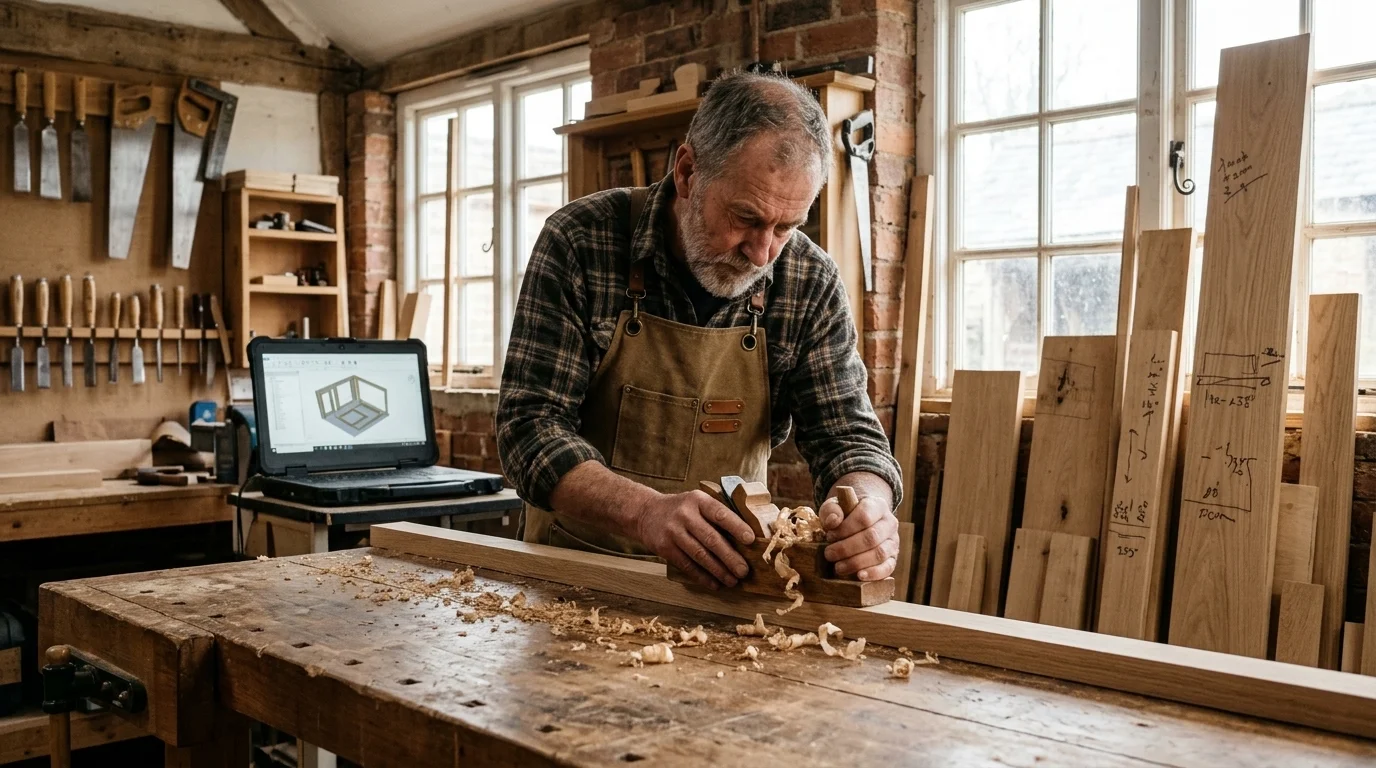
However, raw timber is a living material that expands, contracts, and responds to humidity. Understanding the evolution of traditional timber doors and interior woodwork shows why mass-produced flat-pack alternatives rarely match the longevity of custom joinery. On residential and commercial projects alike, bespoke carpentry specialists combine modern precision with seasoned judgement by selecting the right hardwood, hand-finishing mortise-and-tenon details, and fitting staircases, cabinetry, and structural timber elements so they sit seamlessly within the fabric of a building.
4. Commercial Glazing and Structural Glass: Where Precision Meets Safety
A similar story is playing out in contemporary commercial fit-outs and public spaces. As British offices, retail developments, and hospitality venues embrace open-plan layouts, architects are prioritising maximising natural light in modern building design alongside clean, minimalist sightlines.
While generative software can mock up a sunlit atrium in seconds, turning that concept into a compliant, load-bearing structure requires specialist engineering and installation. High-footfall stairwells, mezzanines, and external terraces demand toughened laminated safety glass, exact stainless-steel channel tolerances, and strict adherence to UK Building Regulations. That is why contractors turn to dedicated providers of commercial glass balustrade systems capable of surveying, fabricating, and installing bespoke architectural glass that satisfies both aesthetic ambition and rigorous structural testing.
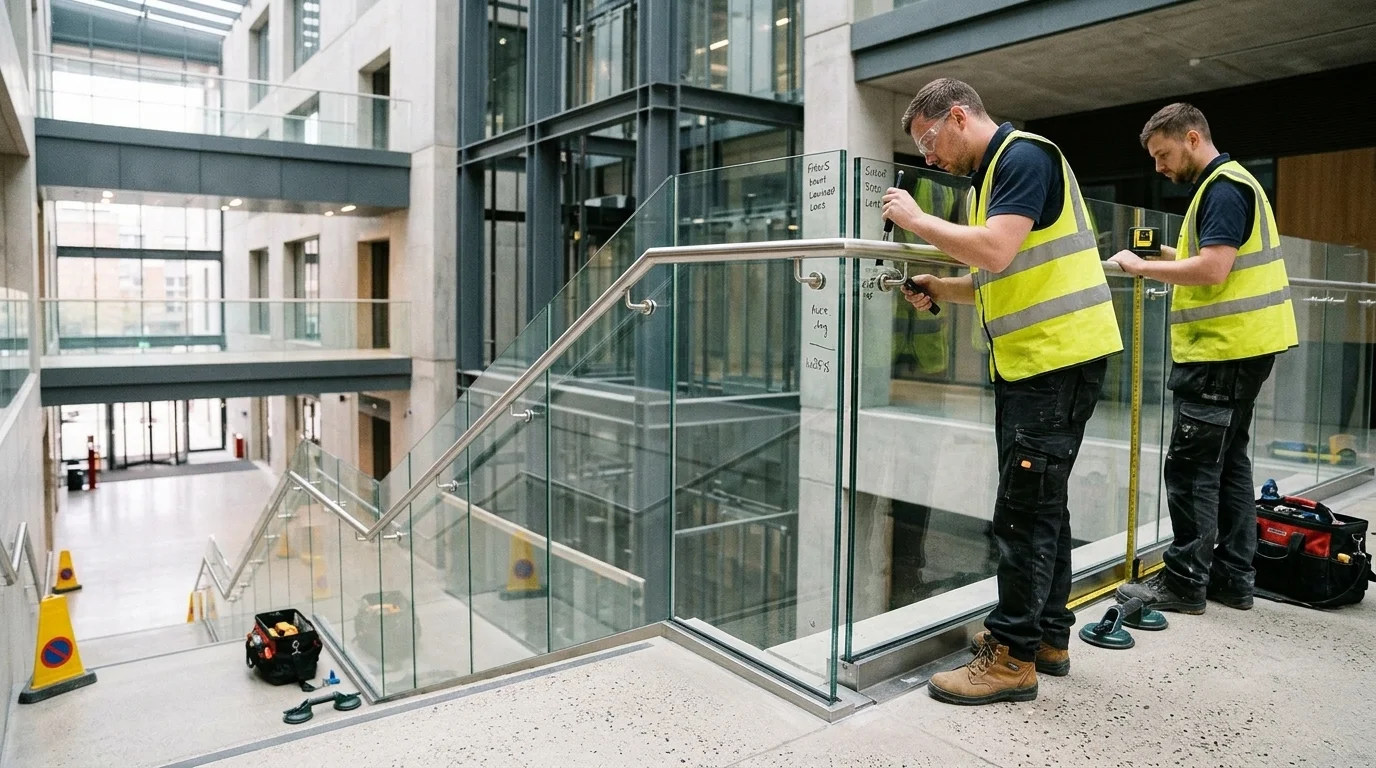
AI Tools vs Human Craftsmanship on Modern UK Projects
- Where AI in Construction Adds Value
- Rapid early-stage 3D visualisations, material take-offs, clash detection in BIM models, site logistics scheduling, and automated regulatory document checks.
- Where Human Craftsmanship Remains Essential
- Bespoke joinery and timber scribing, precision architectural glazing installation, heritage restoration, on-site problem-solving, and legal accountability for build safety.
5. What Clients and Contractors Should Look For Next
As British interior design and traditional craftsmanship continue to evolve, the healthiest projects treat technology as a quiet enabler rather than the headline act:
- Use digital visuals as a starting point, not a finished spec: AI renders are brilliant for exploring layout ideas early, but always verify structural feasibility, tolerances, and material lead times with your contractor before signing off.
- Invest in proven, durable materials: Whether commissioning custom timber staircases or structural glazing, tactile quality and certified fabrication outlast short-lived design gimmicks.
- Back specialist trades early in the build programme: Involving experienced carpenters and architectural glaziers during technical design prevents costly on-site rework and ensures digital drawings match physical reality.